Gwangjang Market: hours, the Sunday catch, and why to bring cash
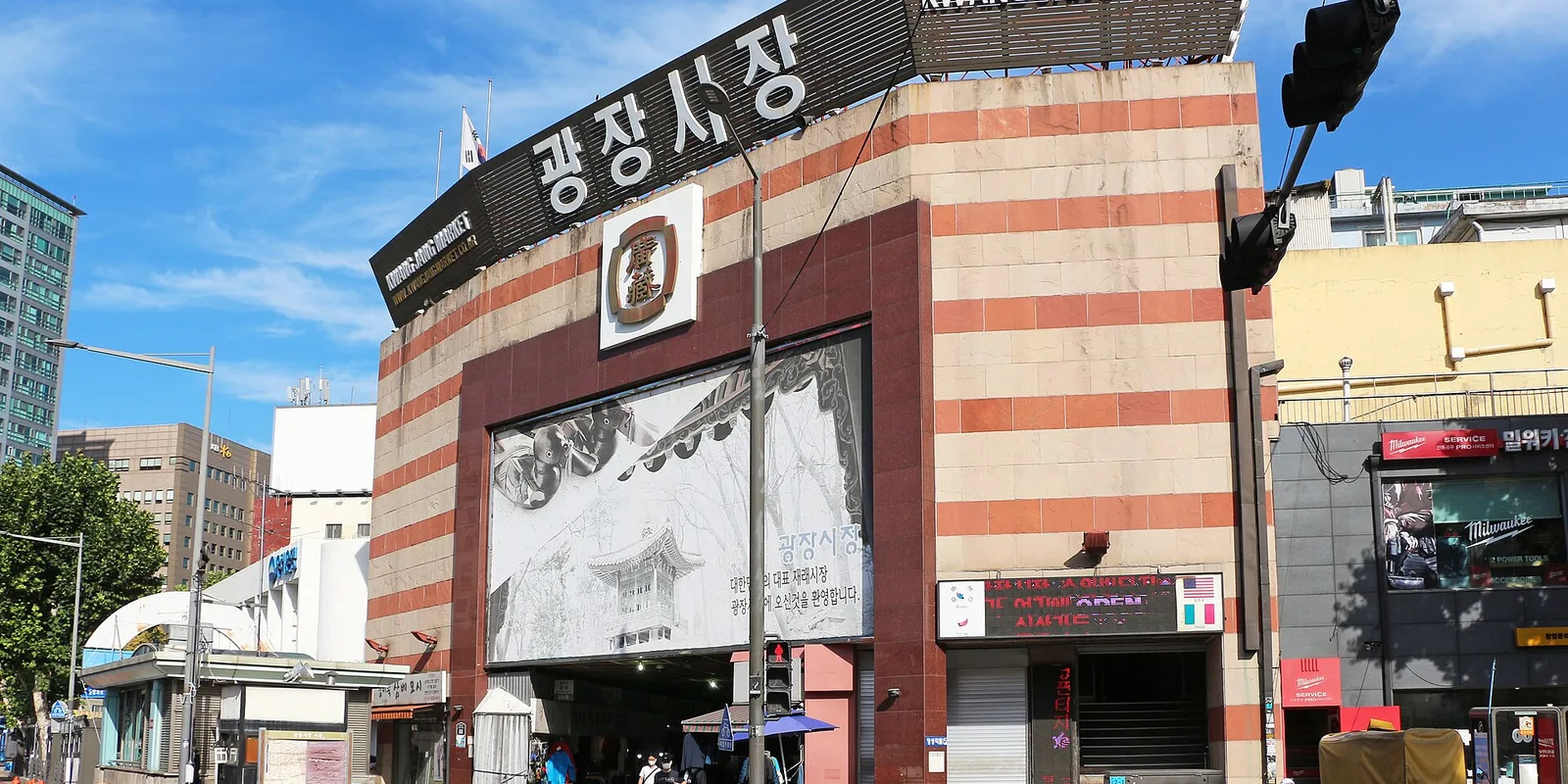
Seoul's oldest market — with a few things worth knowing first
Gwangjang Market opened in 1905 and was Korea's first permanent market. It held 5,628 shops as of 2024, though most visitors now come for the mung bean pancakes and raw beef.
The catch is that this is not a place you can simply turn up to. Sections keep different hours, half the market shuts on certain days, and plenty of stalls won't take a card. Arrive without knowing that and you see half the market.
At a glance (August 2026) Market 09:00–18:00 · Vintage arcade 10:00–19:00 · Food alley daily 09:00–23:00 Sundays: food alley only · Line 1, Jongno 5-ga Station, Exit 8 · Bring cash
On Sundays, half the market is closed
This is the single most useful thing to know, and it rarely makes it into guides.
| Section | Hours | Sunday |
|---|---|---|
| Main market (textiles, hanbok, goods) | 09:00–18:00 | Closed |
| Vintage clothing arcade | 10:00–19:00 | Closed |
| Food alley | 09:00–23:00 | Open |
On a Sunday you get food and nothing else. If hanbok or vintage clothes are the reason you're going, pick another day. If you're only there to eat, Sunday is fine — and the alley runs until 11pm, so an evening visit is unhurried.
Bring cash
Many food stalls do not accept cards. Terminals were installed across the market in 2024 by the district office and the merchants' association, but reporting since then has repeatedly found vendors declining cards anyway, saying they cannot work the machine.
Korea is a country where cards work almost everywhere, so travellers here often carry no cash at all. This market is the exception. There are ATMs in and around the market, but not all of them accept foreign cards, so it is safer to have cash before you walk in.
Some stalls do not post prices. If there is no price tag, ask before you order.
Language is less of a problem than you'd expect
By August 2024 the market installed QR menus in 20 languages for foreign visitors. Scan the code and the menu appears in your own language.
Those menus need data, though. Ordering, checking prices and translating all happen online — so if your connection drops inside the market, the language support drops with it.
Getting there
Line 1, Jongno 5-ga Station, Exit 8 puts you closest to the food alley. Euljiro 4-ga Station on Lines 2 and 5 is also within walking distance.
Published addresses differ — some sources say 88 Changgyeonggung-ro, others 160 Cheonggyecheon-ro. The market is large enough that entrances carry different addresses, so navigating by subway exit is less confusing than by street address.
How long to allow
- 30 minutes — food alley only; a pancake and some gimbap
- 1 hour — food alley plus a loop through the market
- 2–3 hours — including the vintage arcade, if clothes are part of the plan
The vintage arcade opens at 10:00, so an early start finds it still shuttered.
A place where your phone stays in your hand
Reading QR menus, finding your way through the aisles, handling a request to pay by bank transfer, working out where to go next — you will be using data throughout. The aisles are narrow and crowded, which makes asking for directions harder than you'd think.
Sort your data out before you fly
You keep your SIM and add one data line. Your home number stays on your usual SIM; whether its calls and texts reach you abroad depends on your home carrier's roaming.
See eSIMs by countryRead next
- Transiting through Incheon: whether to turn on a Korea eSIM depends on leaving the airport
- Why Kedanto charges in US dollars, and how to read a PayPal payment
- An Incheon Airport SIM and a Korea eSIM differ on phone number, returns and refunds
- Your first 30 minutes in Korea: a checklist from airplane mode to the airport railroad gates