Packing for a Seoul winter when January mornings average −5.5°C and the subway is heated to 18°C
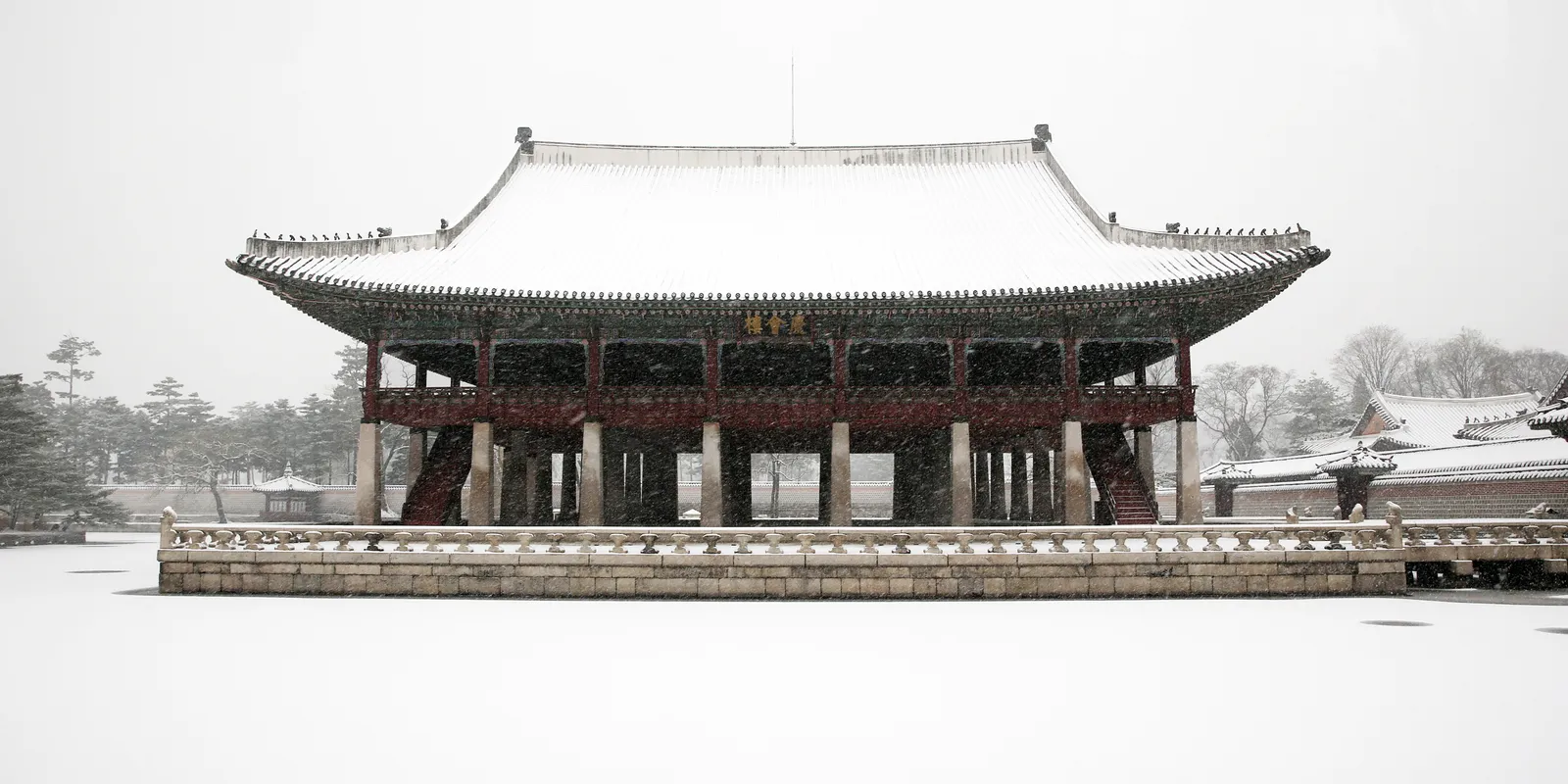
Seoul in winter is colder than Tokyo, London or New York and a few degrees milder than Beijing: by the Korea Meteorological Administration's 1991–2020 climate normals, January averages −1.9°C, with a typical morning low of −5.5°C and an afternoon high of 2.1°C. The cold is dry and the sky is often clear. The days that hurt are the windy ones, and some winters bring mornings below −12°C, the level at which KMA issues a cold wave advisory. Indoors is the opposite problem: subway cars are heated to 18°C and homes run underfloor heating, so the coat comes off many times a day. KMA, the Seoul Metropolitan Government, AirKorea, the Ministry of Food and Drug Safety, Daiso's online shop and Apple's support pages are the sources, and 3 November 2026 is the day they were read.
How cold is Seoul in December, January and February?
January is the coldest month, and the mornings are what you dress for. These are KMA's 1991–2020 normals for its Seoul station:
| Month | Daily mean | Afternoon high (mean daily maximum) | Morning low (mean daily minimum) |
|---|---|---|---|
| December | 0.2°C | 4.2°C | −3.4°C |
| January | −1.9°C | 2.1°C | −5.5°C |
| February | 0.7°C | 5.1°C | −3.2°C |
Those are 30-year averages, so single days swing well past them. The Seoul Tourism Organization's climate page says temperatures "sometimes drop to negative 15 degrees Celsius" and that the Han River occasionally freezes; it also describes the pattern Koreans call samhan saon, three cold days followed by four milder ones. KMA issues a cold wave advisory when the morning low is expected to stay at −12°C or below for two days, and a cold wave warning at −15°C. On the morning of 21 January 2026, YTN reported a Seoul reading of −11.9°C, with −14°C forecast for the next day. If your week looks like that, the table above is the mild version.
Winter is also Seoul's dry season. KMA's normals put December-to-February precipitation at 67.6 mm, about 5% of the year's 1,417.9 mm. Expect bright, cold days far more often than grey, wet ones.
Does the wind make it feel colder than the thermometer says?
On a windy day, yes, by a lot. KMA publishes a winter feels-like temperature (체감온도) whenever the air is 10°C or below and the wind is at least 1.3 m/s, with the same coefficients as the wind-chill formula used by the US and Canadian weather services. Put −10°C into that formula with a 30 km/h wind and the result is about −20°C; with a 5 km/h breeze it is about −13°C. Seoul's annual mean wind speed is only 2.3 m/s, so most winter days are still rather than windy, but cold snaps often come with wind, and that is when a windproof outer layer matters more than a thick one. KMA's weather site shows the feels-like figure next to the actual temperature, and it is the better of the two numbers to dress by.
What goes in the suitcase, and what can wait until Seoul?
Bring the things that have to fit you; buy the things you use up. The Korea Tourism Organization's climate page tells winter visitors they "need to wear thick outerwear at all times", to bring winter jackets, gloves and scarves, and to pack "non-slip shoes for walking on snow". Our split:
| Bring from home | Buy after you land |
|---|---|
| A windproof coat that closes to the neck | Hot packs (핫팩), in hand, adhesive and foot versions |
| A thin thermal base layer, because indoors is warm | KF80 or KF94 masks, only for days the forecast calls bad |
| Gloves that work with a touchscreen | |
| Shoes with grip; smooth soles slide on packed snow | |
| A power bank |
Hot packs and KF masks are the only two things worth buying after you land, for price and availability: both are sold at Daiso and convenience stores all winter, and nothing else on the list is cheaper or easier to find in Seoul than at home.
Where do you buy hot packs in Seoul, and what do they cost?
At Daiso and convenience stores, and Daiso's large hand-warmer pack is 1,000 won. On Daiso Mall, Daiso Korea's online shop, the "손난로형 핫팩 대형" (large hand-warmer type hot pack) is listed at 1,000 won, rated to stay warm for up to 16 hours with a peak of 70°C, checked on 3 November 2026. The same shop lists adhesive packs (붙이는 핫팩) that stick to a layer of clothing and foot packs (발난로형) for inside your shoes. The vocabulary to recognise on the shelf: 핫팩 is the generic word, 손난로 means hand warmer, 붙이는 means adhesive. Convenience stores stock them as soon as the cold arrives; BGF Retail, which runs the CU chain, told Aju News that its hot-pack sales rose 22.2% year on year in the first three weeks of January 2026 (1 to 20 January), when the cold snap hit. These packs start working once opened and shaken and run until they are spent, so open one for the morning and a fresh one for the evening rather than carrying a half-used pack around.
When is fine dust a problem, and do you need a mask?
Winter and early spring, which is why Seoul runs its fine-dust "seasonal management" programme every year from December to March. The 7th round ran from December 2025 to March 2026; the round for this winter had not been posted on the city's site as of 3 November 2026. Seoul's own guidance for those months is to stay in on heavily polluted days and, when you do go out, to wear a mask. The forecast grades come from AirKorea, the Ministry of Environment's air-quality service, and are based on the day's average PM2.5: good 0 to 15 µg/m³, moderate 16 to 35, bad 36 to 75, very bad 76 and above. AirKorea's advice for a bad day is to cut time outdoors, avoid busy roads and construction sites, and wear a health mask certified by the Ministry of Food and Drug Safety, the ones marked KF80, KF94 or KF99. The ministry says a KF80 filters at least 80% of particles averaging 0.6 µm, and that the packaging should carry both the KF mark and the words 의약외품 (quasi-drug). Check the grade each morning on airkorea.or.kr or in a Korean weather app. On a good or moderate day the mask can stay in the bag.
Why do you need layers if it is that cold outside?
Because almost every indoor space you enter is heated to the point where a heavy coat is too much. Seoul Metro's trains are heated and cooled automatically under a Ministry of Environment notice, at 24°C in summer and 18°C in winter, according to a Seoul Metropolitan Government release of 22 May 2026; the city's English page gives the winter range as 18 to 21°C and notes that the ends of each car, by the priority seats, are the coldest spots and the middle is the warmest. Buses are heated too; we found no published temperature standard for them. Homes, guesthouses and hanok stays use ondol, underfloor heating, and the Korea Tourism Organization's accommodation pages say whether a place has it; the floor is where you sit and sleep, so the warmth is exactly where you are. Seoul's winter guidance asks households to keep rooms at 20°C or below, which tells you how warm the baseline is. Hence the layer: a thin thermal top under a sweater, and a coat you can unzip on the platform and take off at the table.
What changes when it snows?
Not much about getting around, as long as your shoes grip. Seoul's normals give 24.0 days a year with snow, and the normal date of the first snow is 20 November, so a December-to-February trip will probably see some. The amounts are modest, which is what 67.6 mm of winter precipitation means in practice; KMA's heavy snow advisory starts at 5 cm expected in 24 hours. The Seoul Tourism Organization says heavy snow "periodically falls on the city" and that parks and gardens turn white when it does; the palace in the photo above is Gyeongbokgung in a December snowfall. Cleared main roads are not where you slip; shaded lanes and the stone steps at the palaces are, which is why non-slip shoes for snow are the tourism organization's advice and not only ours.
How does a Seoul winter compare with winter where you live?
Colder than London and New York, nearly 30 degrees colder than Singapore. All figures are official 1991–2020 normals for January.
- London (Heathrow, Met Office): afternoon high 8.4°C, morning low 2.7°C, about 7 days of air frost in the month. A Seoul afternoon at 2.1°C is a London night, and a Seoul morning at −5.5°C has no London equivalent in an average year.
- New York (Central Park, NOAA): high 4.2°C, low −2.3°C. The closest match on this list; Seoul is two to three degrees colder at both ends of the day, with far less rain.
- Hong Kong (Hong Kong Observatory): mean 16.5°C, low 14.6°C. The gap to Seoul is about 20 degrees at night.
- Singapore (Meteorological Service Singapore): December and January 24-hour mean 26.8°C, night low 24.3°C. The thermal base layer and the real coat are not things your home shops carry; buy them before you fly or on the first day in Seoul.
Why does the phone drain faster, and what does that mean for your eSIM?
Because lithium batteries give less in the cold, and Apple says so directly: iPhone is designed for 0 to 35°C, and using it "in very cold conditions outside of its operating range might temporarily shorten battery life". The same support page says battery life "will return to normal when you bring your device back to higher ambient temperatures", which matches a Seoul winter day: it drains on the walk and recovers in the café. Keep the phone in an inside pocket rather than the coat's outer one, and carry a power bank, because the map, the translation app and the live subway board on your screen are what a winter day in an unfamiliar city runs on.
The data behind those apps is the part Kedanto sells. Its Korea eSIM runs on SK Telecom and LG U+ and does one job, data: there is no Korean number on it and no texting. The counting of its days waits for the phone's first connection in Korea, however long before the flight it was installed; a companion's phone can share it over hotspot; and the order can be cancelled with nothing deducted at any point before installation. The install itself is a short job best done on home Wi-Fi, for the reasons in why installing after you land is too late.
The practical order for a January morning in Seoul is this: tear open a hot pack before leaving the hotel, phone in the inside pocket, mask in the bag only if the forecast said bad, and the coat unzipped the moment the train doors close.
Sort your data out before you fly
You keep your SIM and add one data line. Your home number stays on your usual SIM; whether its calls and texts reach you abroad depends on your home carrier's roaming.
See eSIMs by countryRead next
- Which is cheaper for a few days in Seoul: T-money or the Climate Card?
- Tongin Market's yeopjeon lunchbox: where to buy the coins, the Tuesday closure, and how many to buy
- Seokjojeon at Deoksugung: floors 1 and 2 are reservation-only
- The ski resort at the end of a Seoul subway ride: Elysian Gangchon is 61 minutes and 2,650 won from Sangbong Station