Tongin Market's yeopjeon lunchbox: where to buy the coins, the Tuesday closure, and how many to buy
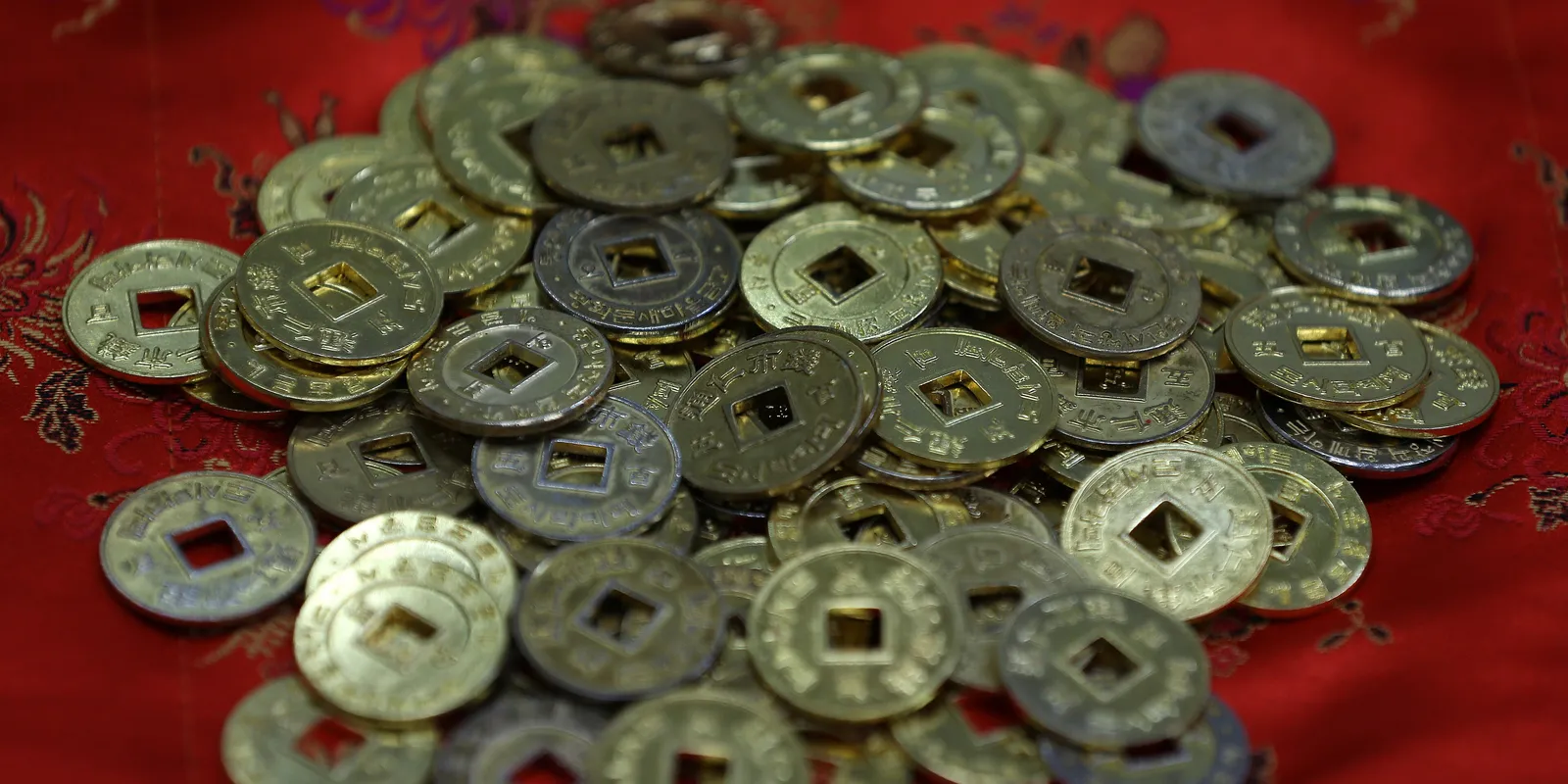
Why does a visit to Tongin Market start with buying coins?
Tongin Market is a small market in the Seochon neighbourhood, on the west side of Gyeongbokgung Palace in Seoul. Among foreign visitors it is known for one thing: you buy side dishes with yeopjeon (tokens shaped like old Korean coins) and put together your own lunchbox.
Walking into Tongin Market does not, by itself, get you a yeopjeon lunchbox. The coins are sold at one specific place, the selling hours are short, and there are closing days. Get any one of the three wrong and you end up walking the alley of side-dish shops with no coins, then walking out again.
At a glance (checked September 2026) One coin ₩500, a bundle of 10 for ₩5,000 · Sold at the lunchbox cafe on the 2nd floor · Weekdays 11:00–15:00, Sat–Sun 11:00–16:00 Closed every Tuesday and the third Sunday of each month · Line 3, Gyeongbokgung Station, Exit 2, 515m · Unused coins are refunded · Toilets inside the market 18 Jahamun-ro 15-gil, Jongno-gu (종로구 자하문로15길 18)
What kind of place is Tongin Market?
Tongin Market opened in June 1941. It began as a public market for the Japanese residents living in the area at the time; after the Korean War, as Seochon's population grew, shops filled in around it and gave it the shape it has today. There are around 70 shops, and restaurants and side-dish shops make up the largest share. The aisle is roofed over as an arcade, so you can carry a tray of food around even when it rains.
The yeopjeon lunchbox dates from January 2012, when the lunchbox cafe Dosirak Cafe Tong (도시락카페 통, 通) opened inside Tongin Market. Tongin Market's signature dish is gireum-tteokbokki, oil-fried rice cakes. Ordinary tteokbokki is rice cakes simmered in a sauce of gochujang, Korean red chilli paste; here the seasoned rice cakes are stir-fried in oil instead, which makes the dish quite different from the tteokbokki served everywhere else in Korea. Where the dish itself came from is not clear, but Wonjo Halmeoni Gireum Tteokbokki ("the original grandma's oil tteokbokki") inside the market started in 1956 as a street stall on Jahamun-ro, is now run by the third generation, and was added to the city's Seoul Future Heritage list in 2014.
How do you get there from Gyeongbokgung Station?
Take Seoul Subway Line 3 to Gyeongbokgung Station and leave by Exit 2, then walk north along Jahamun-ro for 515m, a little over five minutes. The main entrance of Tongin Market faces the Jahamun-ro main road, so it is not hard to find. The address is 18 Jahamun-ro 15-gil, Jongno-gu; in a map app, entering "Tongin Market" is enough.
How does the yeopjeon lunchbox work?
The yeopjeon lunchbox at Tongin Market takes five steps.
- Go up to the lunchbox cafe on the 2nd floor. It is roughly midway along the market aisle, on the 2nd floor of the building that houses the customer service centre (고객만족센터).
- Buy the coins. They cost ₩500 each and are sold in bundles of 10, from ₩5,000. Along with the coins you get a black plastic tray. It is not a take-away container: you eat at the cafe and hand it back. A map marking the participating shops is also available (according to a Seoul city visit report from May 2025).
- Go around the shops with coin price tags (엽전 ○냥). Not every shop in Tongin Market takes coins. Only participating shops display prices in coins, on a tag reading 엽전 ○냥 where ○ is the number of coins, and when you pick a side dish there, the shop puts it on your tray.
- Go back to the lunchbox cafe and eat. The 2nd and 3rd floors are the dining area, with everything from single seats to family tables. Spoons, chopsticks and a microwave are there, so cold dishes can be reheated. Rice and soup are bought separately at the cafe (that is from Seoul city guidance dated 2019, so check the current price on the spot). When you have finished, return the tray to the cafe's tray-return counter.
- Get a refund on leftover coins. Coins you did not use can be handed back at the lunchbox cafe.
At Tongin Market, allow around 40 minutes from buying the coins to finishing the meal. Add a loop of the market and a walk through the Seochon alleys after eating and it comes to about 1 hour 30 minutes.
How many coins should you buy?
A single side dish at Tongin Market usually costs 2–4 coins, which is ₩1,000–2,000. A 2024 visit report put jeon (savoury pancakes) at 3–4 coins and japchae (stir-fried glass noodles) at 4, a 2025 visit report put a plate of gireum-tteokbokki (the market's oil-fried rice cakes) at 4, and meat skewers go up to 8.
For the Tongin Market lunchbox, ₩10,000 per person, or 20 coins, is a sound benchmark. That covers 4–5 side dishes plus rice. In a group, the rule of thumb is 20 per person. Start with 20 and buy more if you run short. Unused coins are refunded, so buying too many costs nothing, but if you paid by card the refund is a hassle.
Can you buy the coins with a card?
The coins at Tongin Market can be bought with either cash or card. Seoul city guidance from 2019 said "buy directly with cash, or pay by card on the 2nd floor", and a visit report from March 2025 recorded that both cash and credit card worked. Whether cards issued outside Korea are accepted is not stated in any source, so it is safer to ask before handing one over.
Refunds on leftover coins work differently depending on how you paid. In a 2025 visit report, coins bought with cash were refunded in cash on the spot, while coins bought by card were handled by cancelling the payment and charging the card again for the amount actually used. That procedure changes from time to time: in 2019, the arrangement was to show the card receipt on the 1st floor and exchange it for coins. If a refund is likely, cash is the simpler option.
At Tongin Market shops with no coin price tag (엽전 ○냥), you pay in won, as in any ordinary shop.
Which days is Tongin Market closed?
The lunchbox cafe at Tongin Market is closed every Tuesday and on the third Sunday of each month (per Seoul Tourism Organization guidance dated May 2026). The market itself is open on Tuesdays, which is how people see the shops trading, assume all is well, and then find they cannot buy coins. On the third Sunday the whole market closes.
The third Sunday is the Sunday that falls between the 15th and the 21st of the month. If the day you plan to visit Tongin Market is a Sunday and the date is between the 15th and the 21st, the market is closed that day. For the second half of 2026 those dates are 20 September, 18 October, 15 November and 20 December.
Older sources and some English-language visit reports still list Tongin Market as "closed on Mondays". Monday was the closing day in the past; now it is Tuesday. Trust an old write-up, turn up on a Tuesday, and the trip is wasted.
The Tongin Market lunchbox cafe also keeps short hours: weekdays 11:00–15:00, Saturday and Sunday 11:00–16:00. Aim for lunchtime; on a weekday, once 15:00 has passed, coin sales are over. A 2025 Seoul city visit report noted that the dining area stayed open for about an hour after sales stopped, but the Seoul Tourism Organization guidance lists closing as 15:00 (16:00 at weekends), so it is safer not to buy right before closing time. Visit reports also mention popular dishes selling out before then, which makes around noon the safest time.
What order works for combining it with Gyeongbokgung Palace?
Gyeongbokgung Palace is closed every Tuesday, its regular closing day, which is the same day the Tongin Market lunchbox cafe closes. On a Tuesday you can do neither.
Seeing Gyeongbokgung Palace before Tongin Market is the safer order. The palace opens at 09:00, while coin sales at the market end at 15:00 on weekdays. Walk the palace in the morning, reach the market between 11:30 and 13:00 for lunch, and you miss neither. If the market comes first, last admission to Gyeongbokgung is 17:00 in March–May and September–October, 17:30 in June–August, and 16:00 in November–February (per Royal Palaces and Tombs Center guidance), so you need to be at the ticket office before then.
Does English work here?
How much English signage there is at the coin counter and in the shops of Tongin Market is not stated in either the Seoul Tourism Organization or the Korea Tourism Organization guidance. Go in assuming there is none and you will rarely be stuck. The yeopjeon lunchbox needs almost no talking: at a participating shop, you hand over as many coins as the number on the coin price tag (엽전 ○냥), and you point at the side dishes you want. If you want to know what a dish is called, pointing a translation app's camera at the price tag is the quickest way.
When do you actually need data?
At Tongin Market, the moment data really matters comes before you arrive. Notices about temporary closures and holiday hours go up on the market's Instagram account (@tongin_official), which the Seoul Tourism Organization guidance introduces as the market's official channel. Checking that notice is the only way to avoid a day when the market is shut even though it is neither a Tuesday nor a third Sunday. Once you are inside, the moment you need data is when a translation app's camera reads the dish names off the price tags for you.
Sort your data out before you fly
You keep your SIM and add one data line. Your home number stays on your usual SIM; whether its calls and texts reach you abroad depends on your home carrier's roaming.
See eSIMs by country