How many people does it take for pocket Wi-Fi to beat an eSIM in Korea?
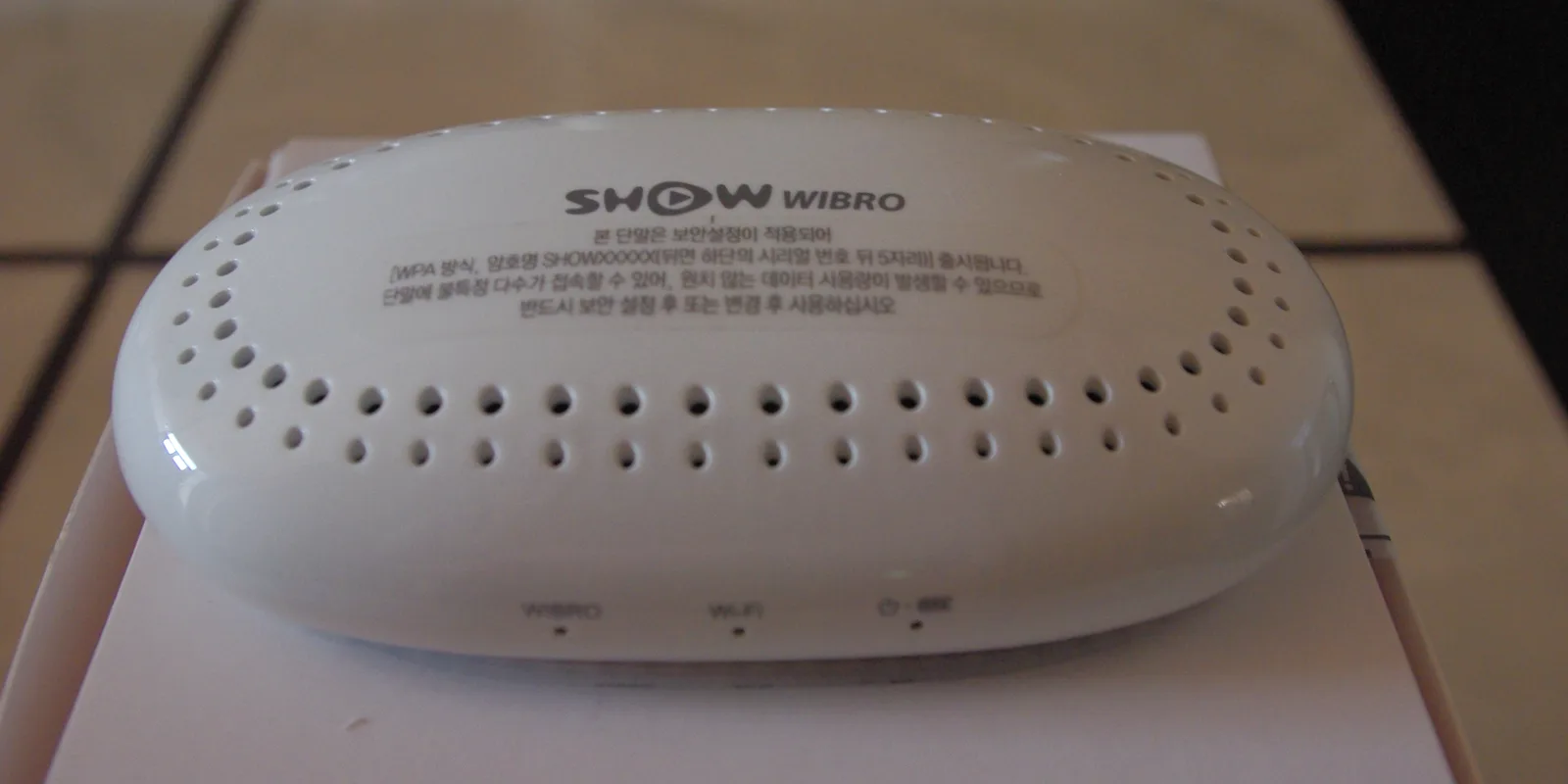
Take an eSIM if you are traveling alone or as a pair with phones that take one. Rent a pocket Wi-Fi if three or more of you will spend every day together, or if someone's phone is locked to a home carrier. The three Korean carriers that rent pocket Wi-Fi routers to visitors (the small battery devices rental sellers often call Wi-Fi eggs), LG U+, SK Telecom and KT, all list them at ₩4,400 a day, and that flat price is what decides most groups. Rental prices, deposit rules and counter hours in this post come from each carrier's English rental pages, and Kedanto's prices from its Korea product pages, all checked on 10 October 2026. Resellers and private rental companies set their own prices, so this comparison sticks to the carriers' own pages.
How much does a pocket Wi-Fi cost per day in Korea?
₩4,400 a day at all three carriers. LG U+ prices one day as 24 hours, and its extension fee is the same ₩4,400 a day. SK Telecom and KT also sell a 30-day rental for ₩55,000; SK Telecom takes that one through online payment only, and KT adds ₩3,300 for each day past 30.
The data on the device is not the same everywhere. LG U+ gives 4GB a day across the whole device, then keeps it running at up to 5 Mbps until the allowance refills at midnight. SK Telecom describes its router as unlimited, and KT's booking page says "unlimited data for multiple users". LG U+ and SK Telecom both describe their devices as running on LTE. Kedanto's Korea plans are listed on SK Telecom and LG U+ with 5G where available, which matters less than it sounds; why 5G is optional on a Korea eSIM explains why LTE is plenty for maps and messaging.
How does one rental compare with an eSIM for each person?
One person always pays less with an eSIM. Two people pay less with eSIMs on trips of five days or more. Three or four people pay less with one shared rental. The table sets one pocket Wi-Fi at ₩4,400 a day against one Kedanto Korea eSIM per person on the 1GB-a-day plan, using prices as of 10 October 2026. Kedanto shows US dollars because PayPal charges in USD; the won figure is the listed price.
| Trip | One pocket Wi-Fi | 1 eSIM | 2 eSIMs | 3 eSIMs | 4 eSIMs |
|---|---|---|---|---|---|
| 3 days | ₩13,200 | ₩6,900 ($5.12) | ₩13,800 ($10.24) | ₩20,700 ($15.36) | ₩27,600 ($20.48) |
| 5 days | ₩22,000 | ₩8,900 ($6.60) | ₩17,800 ($13.20) | ₩26,700 ($19.80) | ₩35,600 ($26.40) |
| 7 days | ₩30,800 | ₩11,900 ($8.82) | ₩23,800 ($17.64) | ₩35,700 ($26.46) | ₩47,600 ($35.28) |
| 10 days | ₩44,000 | ₩15,900 ($11.78) | ₩31,800 ($23.56) | ₩47,700 ($35.34) | ₩63,600 ($47.12) |
For a couple, separate eSIMs save ₩4,200 over five days, ₩7,000 over seven and ₩12,200 over ten; only on a three-day trip is the rental ₩600 cheaper. A group of four on a seven-day trip saves ₩16,800 with one rental. The data is close to like for like: LG U+'s 4GB a day split four ways is about 1GB each, the same as four 1GB-a-day eSIMs. When the allowance is used up, the LG U+ egg slows to up to 5 Mbps for everyone on it, while each Kedanto daily plan slows to 1 Mbps for its own phone only.
Sharing one person's eSIM over a phone hotspot is cheaper than either column, with the same catch as the egg: everyone has to stay close to one device. The group-by-group numbers for that are in the post on sharing one eSIM.
What do you need to show at the rental counter?
Your passport, plus a credit card carrying the same name. The deposit rules differ by carrier:
- LG U+ authorizes ₩1,111 on a credit card without charging it. With a debit card, it takes a ₩70,000 deposit and refunds it automatically when the device comes back in good condition. It allows up to 3 reservations per passport.
- SK Telecom accepts only a credit card for the deposit, not a debit card. Its booking page also rules out overseas-issued American Express, Samsung Card, Hana Card and mobile payments for the deposit, and says cards issued in Korea can't be used for payment.
- KT also requires a credit card in your name and no debit card, with an expiry date more than three months away. It rents up to 4 devices per person and does not accept Korean-issued cards.
A Kedanto eSIM asks for an email address and a PayPal or card payment, and the install QR code is emailed right after payment. There is no deposit.
Where do you pick it up and return it at Incheon Airport?
At a carrier counter on the arrivals floor (level 1) of either terminal, and each carrier keeps at least one of them open 24 hours. In Terminal 1, LG U+ lists a 24-hour counter by Gate F, SK Telecom one opposite Gate 13 and KT one opposite Exit 13; their daytime counters at the other end of the hall (LG U+ at Gate A, SK Telecom opposite Gate 2, KT opposite Exit 2) open 06:00–22:00. In Terminal 2, LG U+ lists Gate 3 (24 hours) and Gate 8 (06:00–22:00), SK Telecom opposite Exit 7 (24 hours) and KT opposite Exit 4 (24 hours). LG U+ adds that its hours can change with international flight schedules.
The return trip is the part people forget. LG U+ says the device must go back before you leave Korea and that fees keep accruing daily until it does. Because the counters sit on the arrivals floor, returning it is a stop before check-in. LG U+ and KT list return points only at Incheon, Gimpo and Gimhae airports, and LG U+ says it does not deliver devices. With either of them, a trip that ends with a flight out of Jeju or a ferry from Busan means dropping the egg at one of those airports first. SK Telecom's terms say that once the return date passes, the service is suspended the next day and the rental is charged to the deposit card. An eSIM stays on your phone, so there is no counter to find on the way out.
How long does the battery last, and what do you carry?
None of the three carriers gives a battery life in hours. LG U+ says battery life depends on usage and network conditions, and offers a free power bank rental with the device. It also says the egg switches to power-saving mode after 30 minutes without use, and you press the power button to bring the data back. SK Telecom says its router is handed over fully charged with a charger in the box.
So a rental means a second device, its charger and probably a power bank in your day bag, all charged every night. With an eSIM the line lives in the phone and adds no device. Sharing that eSIM as a hotspot shifts the work onto the phone's battery instead, as covered in the laptop and hotspot guide.
How many people can share one pocket Wi-Fi?
LG U+ says up to 10 devices at once, and SK Telecom recommends 3 to 5. Both warn that speed drops as more devices join. Every device has to be within Wi-Fi range of the egg, so the person carrying it decides where the group's internet is. If two of you go into a shop and two queue for tickets down the street, half the group is offline. LG U+'s 4GB a day is also shared by everyone on the device, so one person streaming video on the subway eats into the whole group's full-speed allowance.
What happens if the rented device is lost?
You report it straight away and pay a loss fee, which comes back if the device turns up. LG U+ says a fee is charged for loss or damage and refunded if the device is found and returned within 14 days. SK Telecom charges a lost-device fee to the deposit card if a rental is not returned or extended within 5 days after its end date, and refunds it if the device is returned within 30 days of that charge. KT says lost devices must be reported to its customer service immediately. None of the three English pages states the amount of the loss fee.
With an eSIM there is no separate device to lose. If the phone itself goes missing, the eSIM goes with it, and Kedanto adds no charge on top.
Which phones need a pocket Wi-Fi rather than an eSIM?
Phones locked to a home carrier, and phones without eSIM. Wi-Fi-only tablets and laptops can use either a pocket Wi-Fi or a phone's hotspot. SK Telecom notes that its router connects "regardless of overseas carrier lock", because your phone simply joins its Wi-Fi network. A travel eSIM needs a phone that supports eSIM and is unlocked; the phone check post shows how to confirm both. In a group where one phone fails those checks, that person can join a travel companion's eSIM hotspot instead of the whole group renting an egg.
What if your plans change before you fly?
Until you install it, a Kedanto Korea eSIM can be refunded in full; once it is installed, it can't. That is stated on every Korea product page. LG U+ says walk-up rentals are paid when you return the device, in cash or by card; SK Telecom's terms also have you settle the fee at its roaming center on return. If you prepay a rental online, cancellation follows that carrier's booking terms, which we did not compare here.
So which one should you take?
The answer comes down to group size, your phones and where your trip ends.
- eSIM: you travel alone or as two, your phones take eSIM and are unlocked, or your trip ends in Jeju or on a ferry from Busan, away from LG U+'s and KT's return counters
- Pocket Wi-Fi: three or more of you will stay together all day, someone's phone is carrier-locked, or you need to connect a Wi-Fi-only tablet and laptops as well as phones
- Airport SIM: you need a Korean 010 number, which neither option gives you; the airport SIM comparison covers that case
The difference shows up on the last evening. With a rental, the egg, its cable and the power bank go into the outside pocket of a bag so they can come out at the level 1 counter before check-in, and you pay for every day up to that moment. With an eSIM, the last evening has nothing to pack; the line on your phone works until you board, and you delete it whenever you like after you are home.
Sort your data out before you fly
You keep your SIM and add one data line. Your home number stays on your usual SIM; whether its calls and texts reach you abroad depends on your home carrier's roaming.
See eSIMs by countryRead next
- What happens to WhatsApp, iMessage and LINE when you switch to a Korea eSIM
- When exactly is a Korean eSIM activated? Refunds end at installation, validity starts at activation
- Korea and Japan on one trip: why it takes two eSIMs, with prices for three itineraries
- Travel eSIM or Korean prepaid SIM for a stay longer than 30 days?