Your foreign card in Apple Pay pays at Korean tills but not at the subway gate
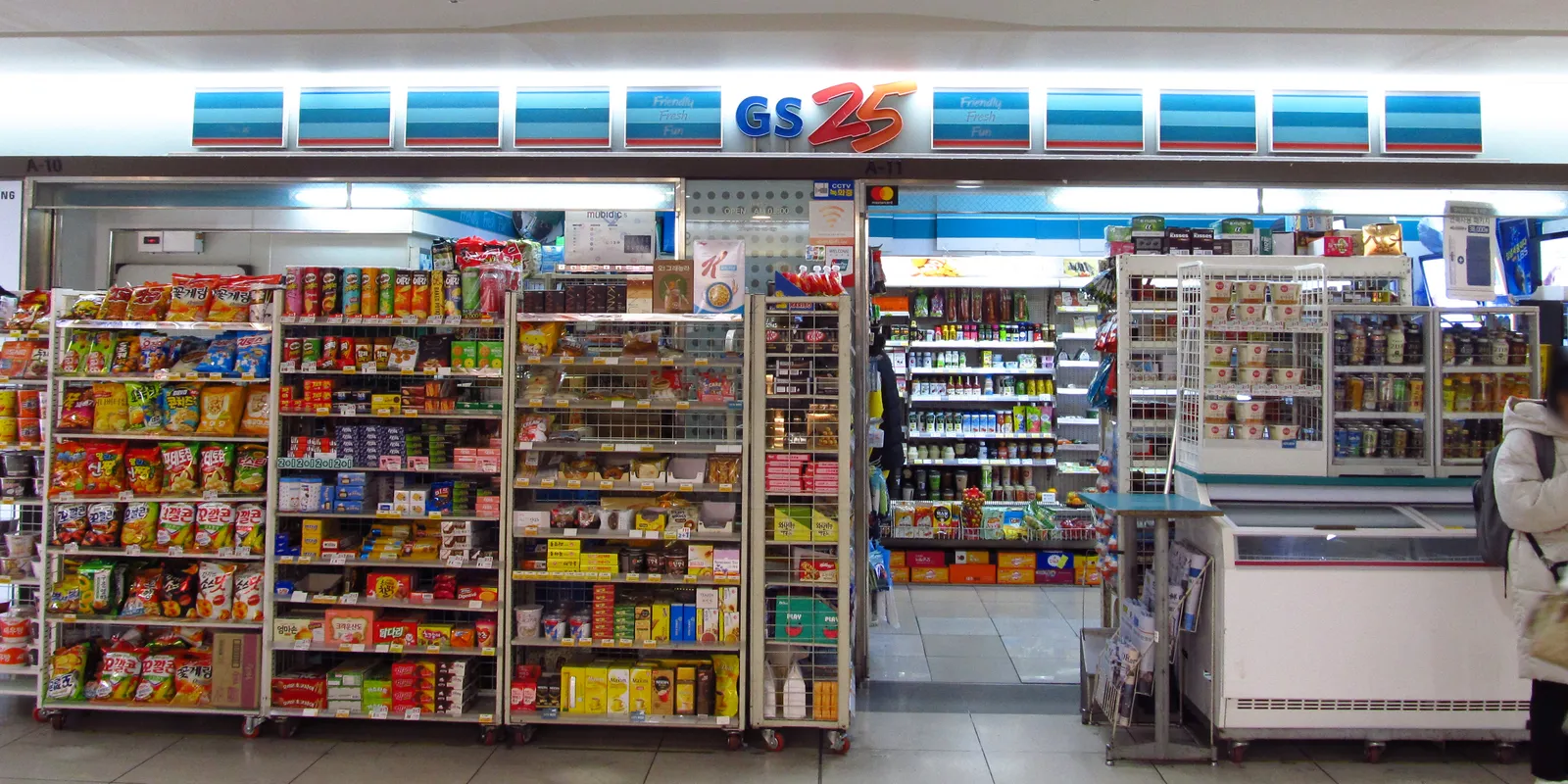
Yes to the tap at the counter, no to the tap at the gate. A Visa, Mastercard or American Express card that already sits in your Apple Wallet pays in Korea wherever the reader shows the contactless or Apple Pay mark, and the convenience-store chains, Starbucks and the big supermarkets have those readers. The subway gate and the bus reader don't: they read a Korean transport card, and the T-money card that lives inside Apple Wallet can only be bought and topped up with a Korea-issued card. So the working setup for a visitor with an iPhone is the phone for shops and a plastic T-money card, topped up in cash, for trains and buses. Apple's support and newsroom pages, the Seoul Metropolitan Government, T-money, VisitKorea, the Financial Services Commission and Ant International supplied what follows; the date of reading was 3 November 2026.
Does Apple Pay in Korea work with a card issued outside Korea?
Yes, at any terminal that takes contactless payments. The limit you may have read about applies to Korean cards, not to yours. Apple's list of countries and regions where Apple Pay works, published on 27 October 2026, includes South Korea, and its rule is the same everywhere: Apple Pay is accepted where the Apple Pay or contactless symbol is shown. Apple's separate page of participating card issuers in Asia-Pacific, dated 4 August 2026, lists one issuer for South Korea, Hyundai Card. That page governs which Korean cards can be added to a Wallet set up in Korea. Your card was added at home under your own bank's arrangement with Apple, and in Korea it pays the way it pays in any other country with contactless terminals.
What decides whether the tap goes through is the reader, not the card. When Apple Pay launched in Korea on 21 March 2023, the footnote to Apple's Korean newsroom announcement said it works at merchants with NFC payment terminals, which should display the Apple Pay logo or the wave-shaped contactless mark, and that the places where it could be used were limited at launch. The test is still the same today: look at the reader before you raise the phone.
Which shops and chains have the NFC readers?
Convenience stores, the big supermarkets and most café and fast-food chains; Starbucks since 9 May 2023. Apple's launch announcement named Costco, A Twosome Place, Lotte Department Store, Homeplus and convenience stores for paying in store, and Baemin (food delivery), Musinsa, GS SHOP, Paul Bassett and Lotte Cinema for paying in apps. Newsis's report on launch day listed GS25, 7-Eleven and CU; Hyundai Department Store and Lotte Mall; Lotte Mart; Lotteria, Baskin-Robbins, KFC and McDonald's; Paul Bassett, Hollys and Tom N Toms; GS Caltex petrol stations; Kyobo and Youngpoong bookshops; and, from the Shinsegae group, only Emart24. E-mart, Shinsegae Department Store and Starbucks stayed out at launch. Starbucks Korea joined on Tuesday 9 May 2023 (the Korea Herald, reporting the next day, wrote 'as of Tuesday'): Hyundai Card's chief executive said that day that 96% of Starbucks Korea's stores took Apple Pay, the exceptions being the 40 stores inside department stores and outlets, in the same Korea Herald report.
If the reader has no contactless mark, hand over the physical card instead. Korean card terminals have been chip terminals by law: the Financial Services Commission reported that by 20 July 2018, 97.7% of merchants had switched to registered IC terminals, and that card transactions at the rest were blocked in principle from 21 July 2018. A foreign Visa or Mastercard goes into the same slot a Korean card does. Taxis: the Seoul Metropolitan Government's taxi page lists cash, credit card or a transport card at the destination and does not mention a tap, so have the plastic card ready in the cab. What the three taxi apps take is compared in Kakao T, k.ride or Uber.
Why does the same phone do nothing at the subway gate?
Because Korean fare gates read transport cards, not bank cards, and Seoul has only started to open that closed loop. In a press release of 16 October 2025, the Seoul Metropolitan Government wrote that foreign visitors still have to buy and top up transport cards in cash because payment with an overseas credit card is not possible, and set out a plan to move fares to an EMV open-loop system in stages from 2025 to 2030: EMV modules on bus readers and a back-office system in 2025 and 2026, then replacement of the subway terminals on Lines 1 to 8 in 2027. T-money, the company behind the transport card, said on 18 September 2026 that foreign-issued contactless cards would be accepted on Seoul city buses in 2027, with Visa, Mastercard, UnionPay and JCB as partners and Hana Card as the domestic acquirer, after development and testing through the end of 2026; Incheon buses and airport buses are to follow. Until that switch, no foreign card and no foreign-card Apple Pay opens a gate.
What has changed since 17 March 2026 is the subway ticket machine, not the gate. From that date, the 440 new machines at the 273 stations on Seoul Subway Lines 1 to 8 take Visa, Mastercard and other foreign credit and debit cards for buying the Climate Card, topping up its 1-, 2-, 3-, 5- and 7-day passes and buying single-journey tickets, with an average service fee of 3.7%. Seoul's announcement says nothing about ordinary T-money top-ups. Whether the Climate Card pays off for a short stay is worked out in T-money or the Climate Card.
Can you add a T-money card to Apple Wallet with your own card?
Not with a card from abroad. T-money has been available in Apple Wallet since 22 July 2025, and Apple's support page on adding transit cards, published on 4 February 2026, states the condition in one sentence: "A South Korea-issued credit or debit card is required to purchase or top up a Tmoney card from Apple Wallet." Seoul's October 2025 release said the city would push, within that year, for T-money in Apple Pay to be topped up with overseas cards as well. As of 3 November 2026, Apple's page still says a Korea-issued card is required, and we found no T-money announcement that the change has gone live. For an iPhone user from abroad, T-money in Korea is a plastic card.
The plastic T-money card itself is easy to get with no Korean card at all. VisitKorea's transport-card page, last updated in August 2026, lists convenience stores nationwide, naming GS25, CU and 7-Eleven, and the information centres of Seoul subway stations on Lines 1 to 8 as the places to buy one, at 3,000 to 5,000 won for the card itself; station ticket machines reload it up to 500,000 won; a refund of more than 50,000 won is only possible at Tmoney Town at Seoul Station. Loading it is done in cash for an iPhone user: Seoul's release says foreign visitors still top up in cash, and adds that Android users can already top up with an overseas card through T-money's Korea Tour Card app, a route an iPhone cannot take. Which airport store to walk to and what the airport railroad machines accept is in your first 30 minutes in Korea.
One route, WOWPASS, does turn a foreign card into T-money balance. This prepaid card for foreigners says in its official FAQ that its own balance can be topped up with overseas credit cards or mobile wallets through its app and with 16 currencies at its machines, that the first registration costs 6,000 won, and that its separate T-money balance is loaded either with Korean won cash at subway machines and convenience stores or by moving money across from the WOWPASS balance in the app. The machines at Incheon Airport's Terminal 1 and Terminal 2 are inside CU stores (Branch No. 1 and Branch No. 3) and take Korean won cash only, so the card-to-T-money transfer is something you do in the app once you are on the train.
Where in Korea will you still need cash?
Transport-card top-ups, market stalls and the odd reader that is older than the chip rule. The top-up is the one that catches people on day one: a 10,000 won note at the convenience-store counter covers several subway rides, and the single-journey tickets from the station machine are the fallback if you have no won at all. Market stalls are the other case. Why Gwangjang Market is a cash place is explained in the Gwangjang Market guide, and what the stalls around Gyeongdong Market take is in the Starbucks Gyeongdong 1960 guide. Everything else on this page, from Starbucks to the subway ticket machine, takes a card from abroad in one form or another.
Do Alipay, WeChat Pay or PayPay work in Korea?
Yes, by scanning the shop's QR code, at a network Ant International puts at more than 2 million merchants. Its release of 9 December 2025 says that as of November 2025, Alipay+ had connected 21 international wallets and bank apps, among them Alipay, AlipayHK, Touch 'n Go eWallet, GCash and, since September 2025, Japan's PayPay, to over 2 million Korean merchants, most of them small businesses; QR transactions grew 18% and payment volume 16% between January and November 2025, with transport the fastest-growing category by number of transactions. It names over 1,200 buses on Jeju and more than 15,000 eZL taxis in Daegu as accepting Alipay+ payments, and the NAMANE QR codes at Myeongdong Night Market. WeChat Pay works the same way: Xinhua reported on 23 April 2026 that Korea's local payment QR codes can now be paid by scanning them with WeChat, alongside those of Sri Lanka, Thailand, Malaysia and Singapore. UnionPay's own Korea page puts QR payments from its UnionPay app at about 1.1 to 1.2 million ZeroPay merchants and says debit cardholders are asked for a PIN at Korean terminals. The sticker to look for at a small shop is ZeroPay (제로페이) or Alipay+.
Which payments stop when the phone has no signal?
The QR payments, and any tap your bank wants to check with you first. A QR wallet has to reach its server to show the amount in won and confirm the payment, so the market stall that takes Alipay+ is also the place where a dead connection stops the sale. Bank notifications about a foreign transaction arrive as push messages over data; if your bank sends a text instead, it goes to your home number, which is why keeping the home SIM on for verification texts matters. What the Korea eSIM from Kedanto supplies is the data under those apps, over SK Telecom and LG U+. There is no Korean number attached to it, so a verification text can't land on it; its validity starts the moment it connects after you land, however early you installed it at home; its hotspot can carry a companion's phone; and an eSIM you haven't installed yet is refunded in full.
At the first convenience store after arrivals, the two halves of the day's setup happen within a minute of each other: the iPhone goes down on the reader for a bottle of water, and a 10,000 won note goes across the same counter for a T-money card and its first top-up, which Seoul's own release says foreign visitors are still paying for in cash.
Sort your data out before you fly
You keep your SIM and add one data line. Your home number stays on your usual SIM; whether its calls and texts reach you abroad depends on your home carrier's roaming.
See eSIMs by countryRead next
- Your first 30 minutes in Korea: a checklist from airplane mode to the airport railroad gates
- Which Korean ATMs give cash on a card from home and who charges for it?
- 20 October at Seoraksan, 4 November at Naejangsan: Korea's 2026 autumn foliage forecast and getting there from Seoul
- The loud alert that just went off on your phone in Korea came from the nearest mast, and its one English word names the hazard